12. Gas chromatography analysis.
[129] A Novel Algorithm for Chromatogram Matching in Qualitative Analysis (1992), with John Mason, Andy Tipler, Richard Sprung and Mark Rendle.J P Mason, I Kirk, C G Windsor A Tipler, R A Spragg and M Rendle, A Novel Algorithm for Chromatogram Matching in Qualitative Analysis, J. High Resolution Chromatography, 15, 539 - 547, 1992.
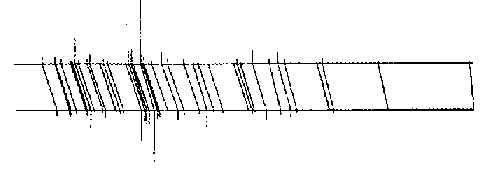
Figure 12 The first successful automatic matching of complex gas chromatography scans.The two samples represent samples of peppermint oils under different conditions.
A contract from the EEC Basic Research in Artificial Intelligence and Neural networks (BRAIN) initiative lead to a productive collaboration with the group of Eli Beinenstock in Paris. On returning from an extended visit there, Windsor wrote a one-dimensional demonstration on his home computer to illustrate the improvements he had suggested. Andrew Chadwick saw a link with gas chromatography and gave him some test data. The method mimics humans by seeking those links which maintain local correlations while minimising the distortions mapping one spectrum on to the other. Within months the method was working, and arrangements being made to patent the method[134]. Two years later the product "Harwell Matchfinder" was launched. This product lead to the quite new application of signature verification, now patented[144], and featured last year on-line in Tomorrow's World.