10. NDT using neural networks- [135] The classification of defects from ultrasonic data using neural networks: the Hopfield model (1989), with Alan Baker
.
A R Baker and C G Windsor, The Classification of Defects from Ultrasonic Data using Neural Networks: The Hopfield Model, NDT International 22, 97-108, 1989.
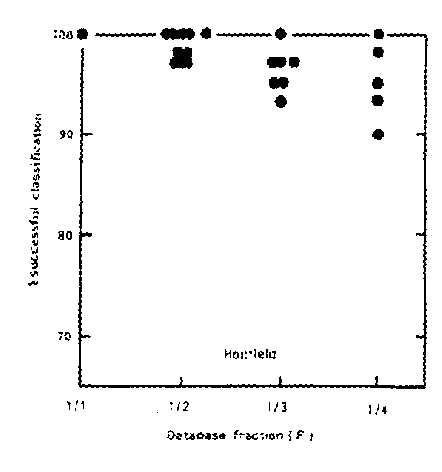
Figure 10 The first neural network method to be applied to the classification of defects using ultrasonics. The performance is shown as a function of the fraction of data included in training.
A talk by David Wallace at the 1985 Reading IoP conference excited Windsor's interest in neural networks. He picked up the subject by himself and by 1987 had published papers on the Hopfield model [126, 132]. This paper had applied the Hopfield model to the classification of defects measured by ultrasonics. Since then the ultrasonic applications of neural networks have blossomed world-wide[112]. Harwell obtained the ESPRIT 2 contract ANNIE for the Application of Neural Networks for Industry in Europe, and Windsor was the chairman of its Pattern Recognition Working Group, once described by an EEC referee as the jewel in Annie's crown! The Harwell group continued the ultrasonic studies eventually leading to an on-line demonstrator based on the Harwell ZIPSCAN ultrasonic data collection system. This system would scan over a weld defect, and immediately classify it by both conventional and neural network methods. It was one of four projects chosen by the EEC to represent ESPRIT 2 at the Avignon Expert Systems Exhibition in 1991[152].